Building a Wine Cellar on a Budget: Where to Save and Spend
Creating a wine cellar that balances cost, performance, and visual appeal starts with making the right decisions early. A well-planned space can protect your collection, look refined, and grow with your needs—without pushing the project beyond your limits. The key is knowing where your investment has a lasting impact and where you can keep things simple.
Ahead, we’ll break down how to approach building a wine cellar on a budget, with clear priorities for both homeowners and builders.

Sales Person: Cameron Norcross
Start With the Right Space Before You Spend on Anything Else
The most cost-effective way to build a wine cellar is to begin with a space that already works in your favor. Basements, under-the-stairs areas, and interior closets tend to stay cooler and darker than other parts of the home, which reduces how much you need to modify the environment later.
This is one of the easiest ways to save money. Choosing the right location can lower the need for an oversized cooling system and limit how much work is required during wine cellar construction. A poorly chosen room can quickly turn a modest project into a more complex and expensive one.
You can also reduce upfront costs by choosing a location close to existing electrical access and, when possible, in a part of the home that is less exposed to outdoor temperature swings. This limits the need for additional wiring, insulation upgrades, or structural changes during wine cellar construction.
It’s worth spending a little time evaluating the space before moving forward. Monitoring temperature and humidity over time can help confirm whether the room is naturally stable or will require additional upgrades.
Spend on Insulation, Sealing, and Moisture Control
A wine cellar performs only as well as its insulation, sealing, and moisture control. Focus on the core elements that keep the environment consistent:
- Insulation - Helps maintain steady internal temperatures
- Vapor barrier - Prevents moisture from entering or condensing inside the walls
- Airtight sealing - Keeps outside air from disrupting conditions
- Door weatherproofing - Reduces temperature loss and air leakage
Proper wine cellar insulation helps stabilize the environment, while a well-installed vapor barrier protects against long-term moisture issues. Sealing gaps around walls, ceilings, and doors ensures the cellar remains consistent rather than fluctuating with the rest of the home.
Cutting corners here often leads to higher costs later. A poorly sealed room forces the wine cellar cooling system to work harder, increases energy use, and can lead to avoidable performance issues.
If you need to trim the budget, keep finishes simple. You do not need elaborate wall treatments or premium flooring to create a dependable environment.

Be Smart About Cooling and Climate Control
Wine stores best when temperature and humidity stay within a steady range, generally around 50–60°F with 50–70% relative humidity. Standard home HVAC systems are not built to manage these conditions reliably. Some naturally cool basements or interior rooms can support long-term wine storage with minimal intervention, provided conditions stay stable throughout the year
It’s best to think through cooling requirements early in the design process. For instance, if the cellar will use a self-contained unit, the exhaust path and surrounding space need to meet the system’s requirements. Split and ducted cooling systems have different installation needs, so planning around the equipment type from the start can help avoid costly changes later.
Save on Finishes, but Not on the Cellar Door or Glass Decisions
It is easy for finishes to take over the budget. Decorative woodwork, specialty flooring, and large glass enclosures can quickly increase costs without improving how the cellar performs.
At the same time, not all visual elements are purely aesthetic. The cellar door and any glass features directly affect insulation and temperature control. Poorly sealed doors or expansive glass panels can introduce heat and make the room harder to regulate.
You can keep costs under control by focusing on:
- Simple, clean finishes that still feel polished
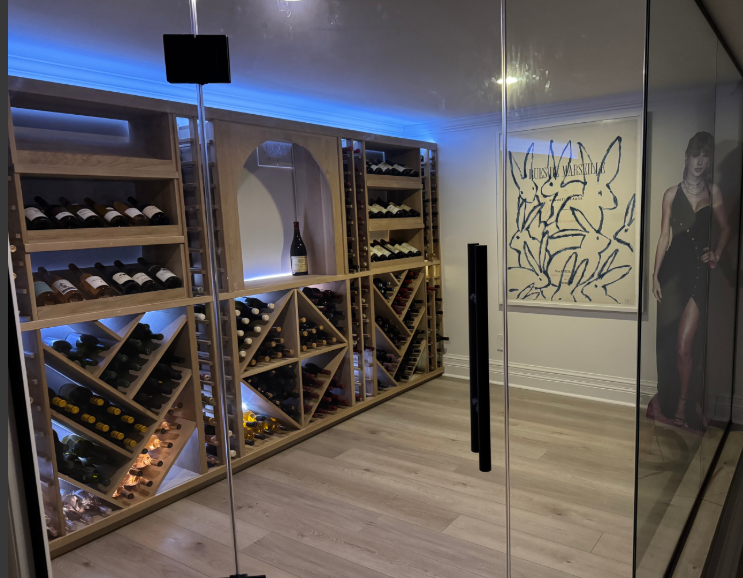
- Minimal use of glass to make the space easier to cool
- Less decorative millwork and trim in the initial build
- No built-in tasting area unless the space truly calls for it
- A simpler lighting plan that can be upgraded later
A well-designed space can feel elevated without relying on expensive showpiece features.

Choose Racking That Fits the Collection, Not Just the Budget
Wine racks are one of the most visible elements in any cellar, but they are also one of the most practical. The goal is not just to store bottles—it’s to store them in a way that fits your collection.
Plan your custom wine racks around:
- Bottle variety - Bordeaux, Burgundy, and Champagne require different spacing
- Future growth - Modular racking (such as our Instacellar standard Wine Racks) makes expansion easier
- Ease of access - Bottles should be easy to remove without disruption
- Stability - Secure racks protect both the wine and the space
Standardizing rack sizes and layouts can also help control costs. Mixing too many custom sections or specialty inserts often increases both material and installation complexity without improving everyday usability.

Keep the Layout Efficient and Leave Room to Grow
A well-planned layout can stretch your budget further than almost any material choice. Efficient use of space often matters more than upgrading finishes.
Before finalizing your cellar design, focus on:
- Maximizing wall space for wine storage
- Reducing unused areas by eliminating awkward gaps and low-use zones, while planning clear areas where additional racks can be added over time
- Balancing display and capacity by reserving display sections for featured bottles and using the majority of the space for efficient, everyday storage
Many homeowners devote too much space to display early on, only to find they need more storage later. A more balanced layout helps avoid costly changes down the line.
Remember that modular systems—such as build-your-own configurations within the GrandCellar™ Collection—allow you to expand over time without replacing your entire setup.
One helpful guideline is to take your current bottle count and multiply it by 2.5 to estimate future capacity needs. This creates a practical buffer for growth without immediately overbuilding the space.
Add Lighting and Decorative Touches After the Core Build Is Right
Lighting and finishing details bring the cellar to life, but they should come after the structure and storage are in place.
A simple approach works best:
- Low-heat LED lighting to avoid warming the space
- Targeted placement to highlight wine racks
- Minimal decorative elements early on
- Phased upgrades like furniture or artwork over time
Using plug-in or surface-mounted lighting instead of fully integrated systems can also reduce installation time and cost in a DIY wine cellar setup.
Decorative elements such as tasting tables or upgraded finishes can be added gradually. This allows you to stay within budget while still creating a space that feels complete.
A clean, well-organized cellar often feels more refined than one filled with unnecessary features.
Where It Pays to Get Expert Help
Some aspects of creating a wine cellar benefit from experienced guidance. Cooling system selection, insulation strategy, and overall cellar design are areas where small missteps can lead to larger costs later.
Working with a design team can help:
- Improve storage efficiency and layout
- Avoid common construction mistakes
- Ensure the cooling system matches the space
- Plan for future growth without overbuilding
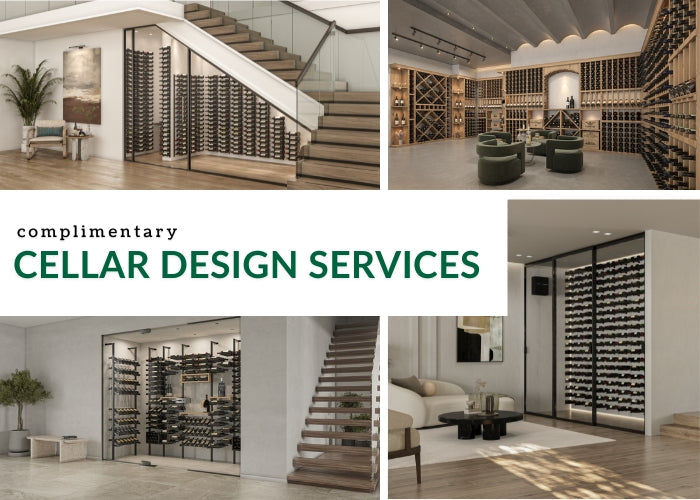
For many homeowners and builders, this is where working with a team like Wine Racks America can make a meaningful difference. With over 20 years of experience, we offer free design consultations and detailed 3D renderings—typically delivered within 48 hours—so you can see how your space will come together before construction begins.
Professional guidance is not just for large projects. Even a modest cellar can benefit from a well-thought-out plan, especially when the goal is to balance performance and budget.
Build Smart, Spend With Purpose
Building a wine cellar on a budget is not about doing less—it is about doing the right things first.
Spend on the elements that protect your wine: the space itself, the insulation, the sealing, and the cooling approach. Save on areas that can be phased in later, like decorative finishes and non-essential features.
With a thoughtful approach, your efforts will result in a space that feels complete from the start and continues to improve over time.